Initiatives in Business Activities
Initiatives in Business Activities
Casio is working to reduce its environmental impact, guided by targets for achieving zero emissions*1 of waste from its business activities and reducing water intake. To achieve zero emissions of waste, Casio is working to reduce the waste generated by its business activities and to decrease its landfill disposal rate. Casio also contributes to a recycling-oriented society through the voluntary collection and recycling of used products.
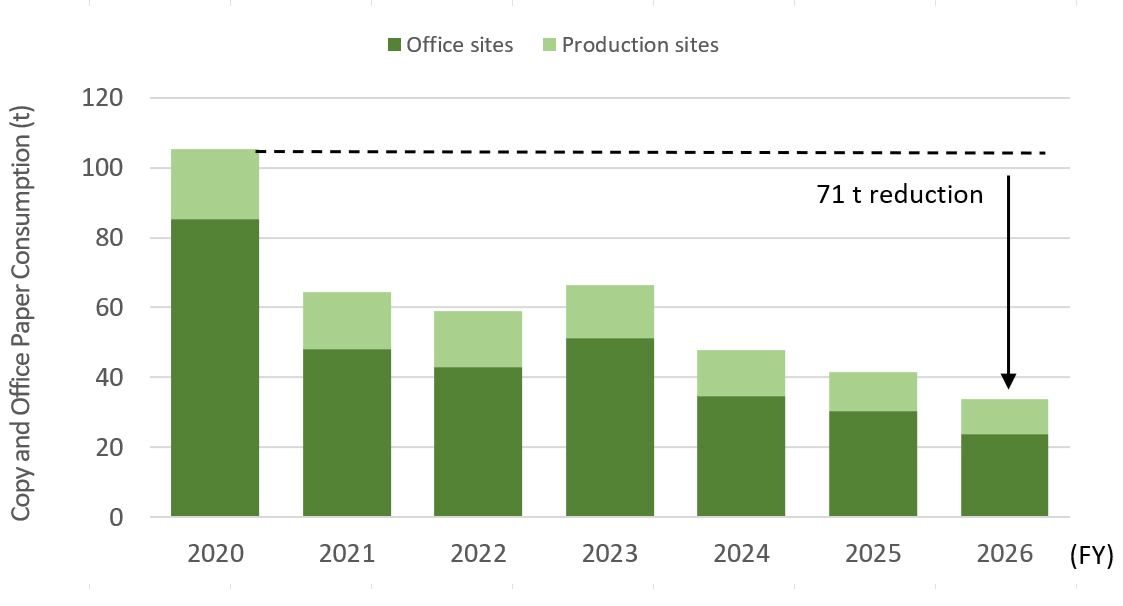
Reducing Use of Office Paper
Casio has continued to promote a shift to paperless, digitized internal operations. As a result, the use of copy and office paper at Group sites has maintained a downward trend, mainly at office sites, and is down approximately 71 tons compared to the base year of fiscal 2019.
Reducing Waste and Decreasing Landfill Disposal Rate
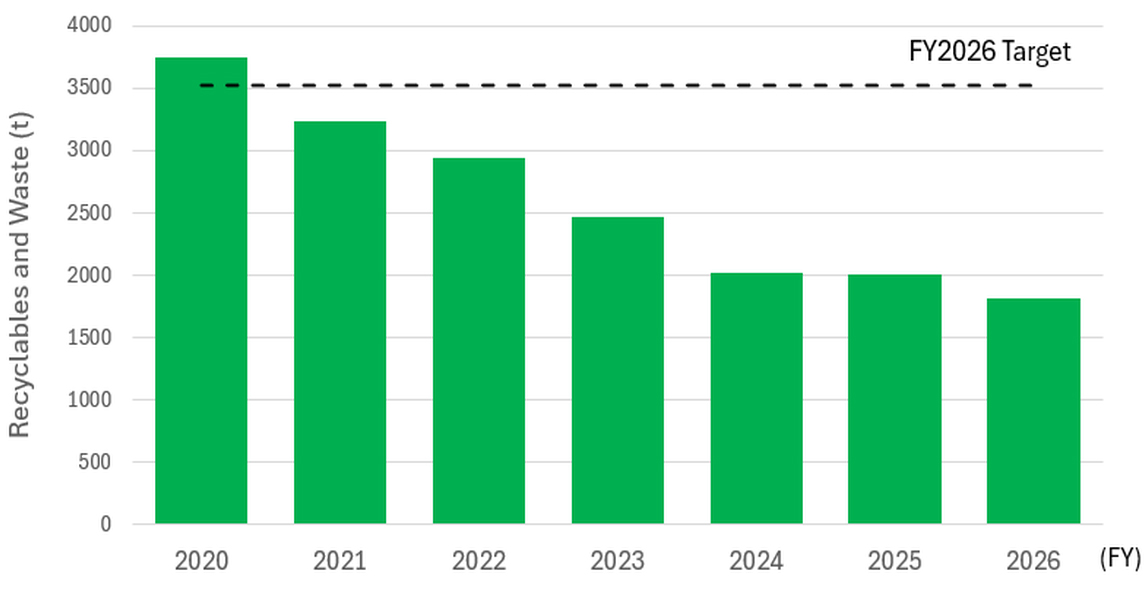
To help build a recycling-oriented society, Casio has set targets for reducing the generation of waste (including valuables) and is working to meet them.
The Casio Group operates business sites all over the world, and waste regulations, disposal infrastructure, and other conditions vary from region to region. Casio is therefore working toward its targets by refining and visualizing performance data, collecting information from each site, monitoring the situation across the Group, and sharing effective initiatives among sites so they can be adopted more widely.
Casio has set targets for each fiscal year and is verifying the status of achievement. For fiscal 2026, Casio set targets to reduce the amount of generation of waste (including valuables) by at least 6% compared to fiscal 2020. Each site implemented its initiatives, and this target was achieved.
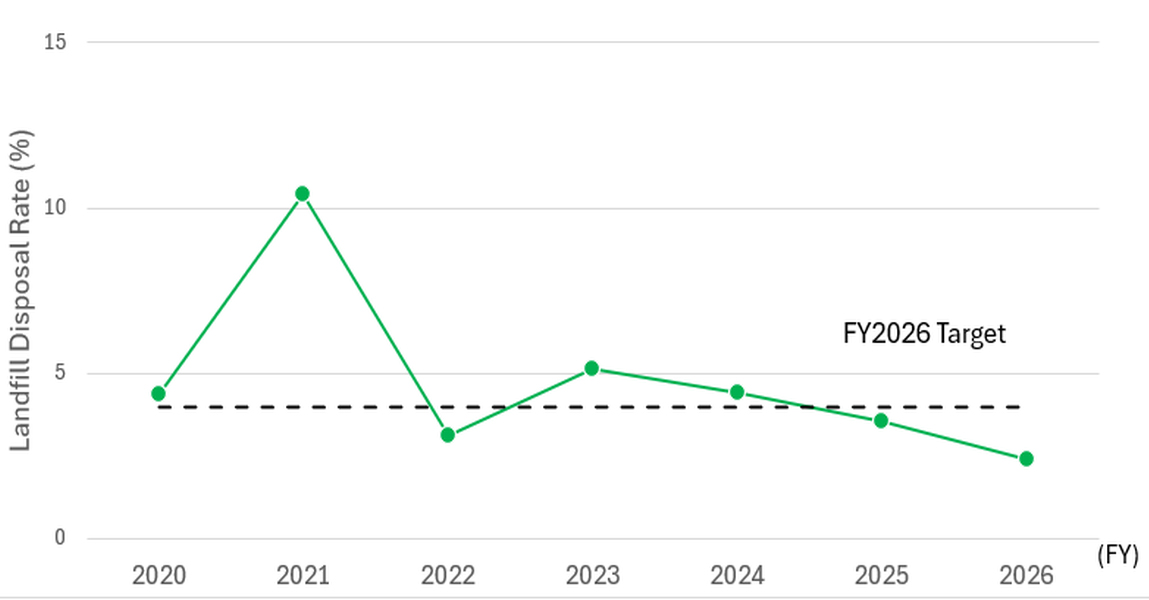
Casio is also working to reduce landfill disposal to reduce environmental impact. For fiscal 2026, Casio set a target to achieve a landfill disposal rate of 3% or less, and this target was achieved.
Reducing water intake
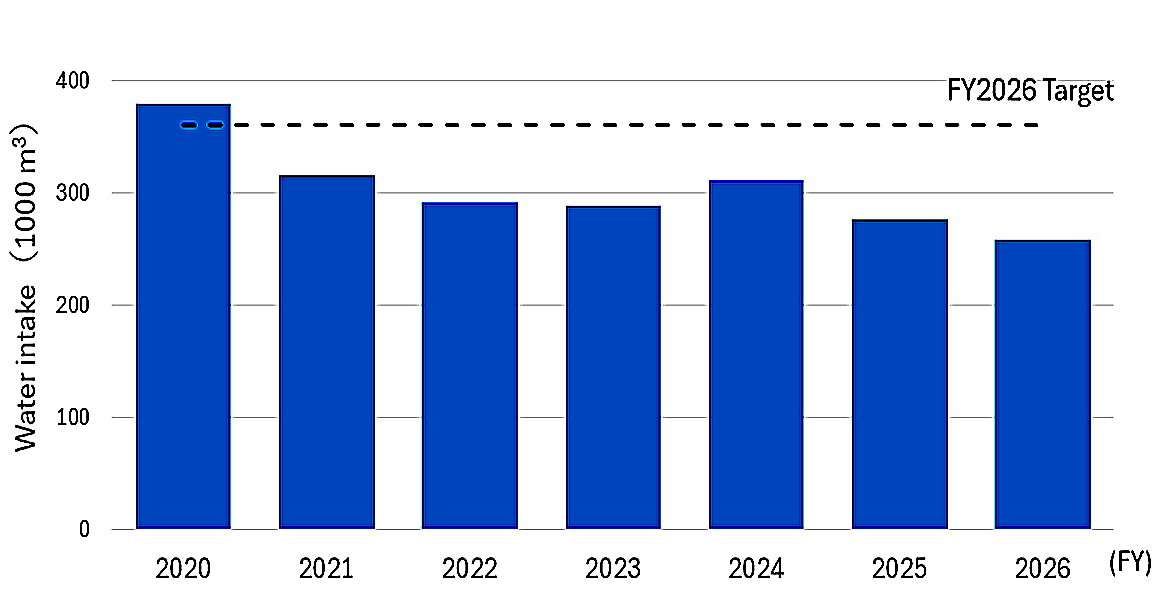
Water is a vital resource that supports both business activities and people’s daily lives. In recent years, however, water-related risks have been rising, driven by growing demand from population growth and the effects of climate change on water supply. These risks could also affect the Casio Group’s business activities.
In the Casio Group’s production activities, water use is limited to a few processes, such as washing certain components. Most of the Group’s water intake is used for air conditioning and domestic purposes, both essential to maintaining safe and hygienic operations.
When Casio assessed water stress levels*1 at Group production sites with high water intake, it found that one production site is located in an area of high water stress. In light of this result, Casio has set a Group-wide target for reducing water intake and is working to reduce risks related to its use of water resources.
Casio has set targets for each fiscal year and is verifying the status of achievement. For fiscal 2025, we set a target of reducing water intake by at least 6% compared to fiscal 2020. The target for the year was achieved as a result of water saving activities at each site.
*1 The Baseline Water Stress indicator presented in WRI Aqueduct Water Risk Atlas 4.0. Casio assessed sites where the Baseline Water Stress is High or more as under water stress.